
Technology and IT companies run on data. Over time, that data piles up on retired hard drives, old backup tapes, zip drives, CDs and DVDs. When that equipment is replaced, the information on it doesn’t disappear on its own. If it isn’t physically destroyed, confidential business and customer data can end up in the wrong hands.
Chesapeake Paper Systems, a locally owned, NAID AAA Certified information destruction company in Baltimore, provides on-site hard drive and media destruction for technology and IT companies across Maryland, Washington DC and Northern Virginia, using the most advanced hard drive destruction unit on the market.
What Media Chesapeake Destroys
- Hard drives
- Zip drives
- Backup tapes
- DVDs
- CDs
How On-Site Hard Drive Destruction Works
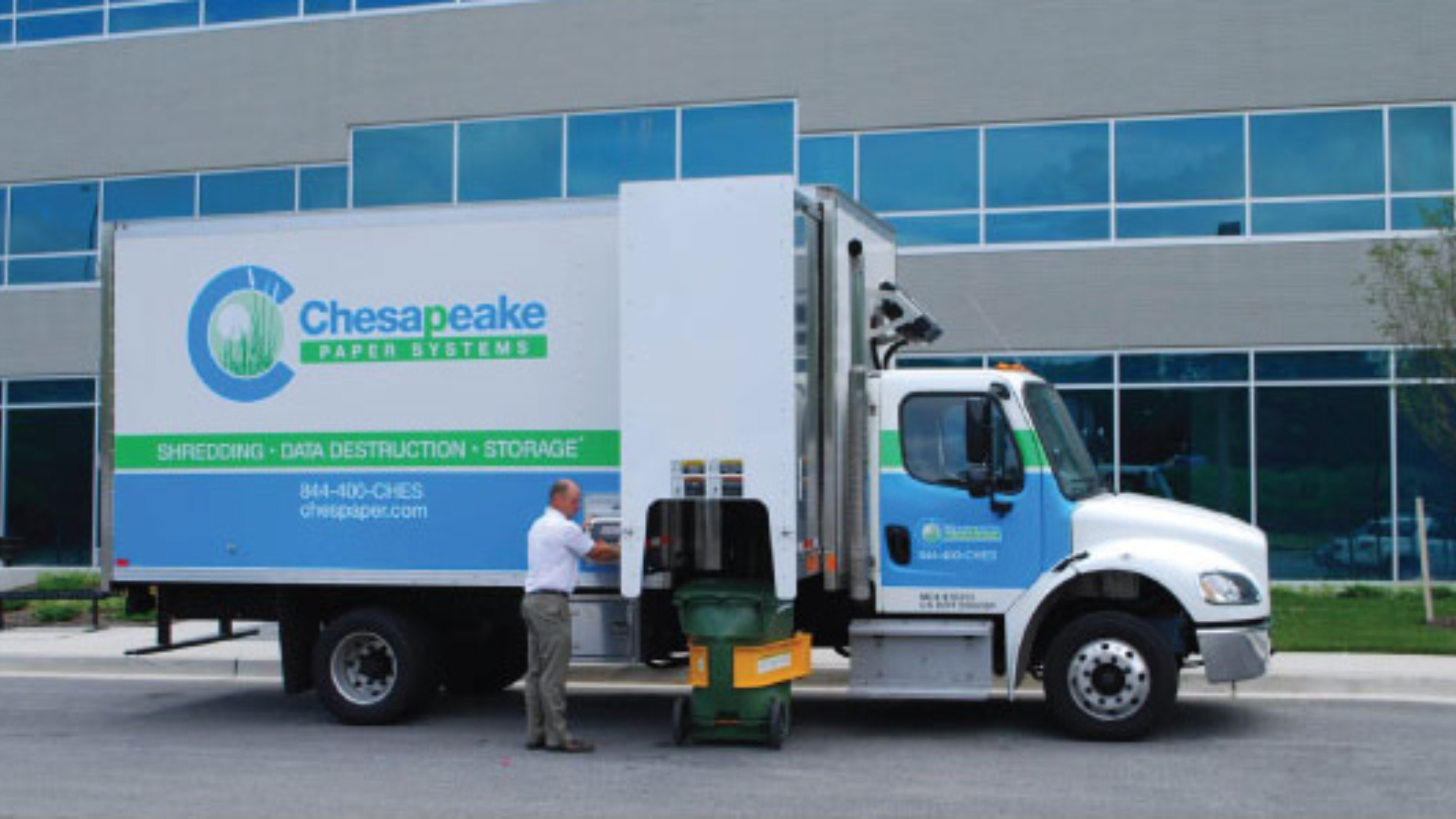
- The mobile unit comes to you. Chesapeake’s truck brings its destruction equipment directly to your facility, so your media never leaves your property intact.
- Serial numbers are recorded. Before anything is destroyed, technicians gather the serial number of each drive for your records.
- Destruction takes seconds. Each drive is destroyed in about six seconds, and at that point the data is completely destroyed.
- You can watch. You’re welcome to observe the entire process.
The result is data that can’t be recovered and 100% confidentiality for your company and your customers.
Why Serial Number Tracking Matters
For IT teams responsible for managing equipment, knowing exactly which drives were destroyed is essential. Because Chesapeake records serial numbers before destruction, you have a clear record tying each retired device to its destruction for your own files.
Don’t Forget the Paper
Tech companies still generate confidential paperwork: customer information, contracts with signatures, employee records, pay stubs, resumes, financial statements and tax forms. Chesapeake installs locked consoles and bins throughout your office at no extra charge and empties them daily, weekly, monthly or on request. Documents are shredded on-site in Chesapeake’s mobile trucks, which process up to 4,500 pounds of paper per hour.
Compliance Support
Chesapeake meets all state and federal laws regarding information destruction, including HIPAA, FACTA, the Gramm-Leach-Bliley Act and Sarbanes-Oxley. As a NAID AAA Certified member of the National Association for Information Destruction, it maintains the highest industry standards.
Responsible Recycling
Destroyed materials are securely recycled through qualified paper and electronic recyclers. Chesapeake’s destruction trucks run on Ultra Low Sulfur Diesel and B5 biodiesel.
Schedule Your Hard Drive Destruction
Retiring hard drives or backup media? Call Chesapeake Paper Systems at 844.400.2437 (Monday to Friday, 8:00 a.m. to 6:00 p.m.) or visit 99 Ray Road, Baltimore, MD 21227. Learn more about hard drive destruction.
Meta: On-site hard drive, backup tape and media destruction for tech and IT companies in Baltimore, DC and Northern Virginia. Serial numbers logged. NAID AAA.
Government agencies manage enormous amounts of confidential information, from employee records to sensitive internal reports. When that information is no longer needed, it has to be destroyed in a way that leaves no chance of loss or compromise. Choosing the right shredding partner is a decision agencies can’t afford to get wrong.
Chesapeake Paper Systems is a locally owned, NAID AAA Certified shredding and records management company in Baltimore with established relationships with federal and state government agencies. Its clients include the U.S. Navy, U.S. Army, Department of Homeland Security, National Institutes of Health (NIH) and U.S. Postal Service, along with state and local government entities.
Why Agencies Choose Chesapeake Paper Systems
- Proven with federal clients: Trusted by military branches, federal departments and research agencies
- NAID AAA Certified: Maintains the highest industry standards while meeting all federal and state requirements
- Compliant: Meets state and federal information destruction laws, including HIPAA, FACTA, the Gramm-Leach-Bliley Act and Sarbanes-Oxley
- Local: Locally owned and managed in Baltimore
On-Site Destruction Under Video Surveillance
For agencies, knowing exactly what happened to sensitive documents is essential. With Chesapeake’s on-site shredding:
- Uniformed technicians collect documents from your building in locked bins.
- Bins are moved to the mobile shredding truck under video camera surveillance.
- Documents are destroyed on-site within minutes, and you can monitor the entire process.
- A Certificate of Destruction is issued for your records.
Chesapeake’s trucks shred up to 4,500 pounds of paper per hour, which makes them well suited to large offices and bulk purges.
Locked Containers for Every Office
Chesapeake installs locked containers throughout your facility at no extra charge, so staff always have a secure place to put confidential documents:
- Consoles: 35″ H x 48.3″ W x 16″ D, holding 80 to 100 pounds
- 64-gallon bins: holding up to 200 pounds
- 96-gallon bins: holding up to 300 pounds
Pickup is available daily, weekly, monthly or on request. One-time purges are also available for clearing out records that have reached the end of their life cycle.
Hard Drive and Media Destruction with Serial Number Records
Agency data lives on hard drives, backup tapes and discs as much as on paper. Chesapeake destroys hard drives, zip drives, backup tapes, DVDs and CDs on-site using the most advanced hard drive destruction unit on the market. Technicians gather serial numbers for your records before destruction. The process takes only six seconds, and at that point the data is completely destroyed. You’re welcome to observe.
Records Storage for Documents You Must Keep
For records that need to be retained, Chesapeake’s storage facility offers 24-hour video surveillance, the latest fire detection and suppression technology, and an indexing and barcode system that makes records easy to track and retrieve.
A Greener Choice for Public Agencies
Chesapeake is committed to environmental sustainability. Shredded material goes to qualified paper and electronic recyclers and returns to the marketplace as recycled copy paper, paper towels, packaging and other paper products. Its destruction trucks run on Ultra Low Sulfur Diesel (ULSD) and B5 biodiesel, and the company says its fleet uses less fuel per pound of paper shredded than any other on the market.
Serving Agencies Across the Region
Chesapeake serves Washington, DC and communities throughout Maryland and Northern Virginia, including Annapolis, Baltimore, Bethesda, Frederick, Gaithersburg, Rockville, Silver Spring, Upper Marlboro, Alexandria, Arlington, Fairfax, McLean, Reston, Springfield and Tysons.
Talk to Chesapeake About Your Agency’s Needs
Chesapeake’s knowledgeable staff will help design a shredding program that meets your agency’s needs, schedule and budget. Call 844.400.2437 (Monday to Friday, 8:00 a.m. to 6:00 p.m.) or visit 99 Ray Road, Baltimore, MD 21227.
Meta: Trusted by the Navy, Army, DHS and NIH. NAID AAA Certified on-site shredding and hard drive destruction for government agencies in MD, DC and Northern VA.
Confidential documents don’t stop requiring protection once you’re finished using them. In fact, securely disposing of sensitive information is just as important as storing it in the first place.
The challenge for many Baltimore businesses isn’t knowing documents should be shredded—it’s creating a document destruction process that’s secure, consistent, and easy to maintain. A mobile shredding service helps make secure document destruction part of your everyday operations instead of another task on your team’s to-do list.
Build Document Destruction Into Your Routine
Most businesses don’t intentionally delay shredding confidential documents. More often, it simply gets pushed down the priority list.
Employees are busy, deadlines take precedence, and a small stack of paperwork waiting to be shredded gradually turns into several boxes. Before long, document destruction becomes a large cleanout instead of a routine part of daily operations.
That’s why consistency matters. Many Baltimore businesses use a mobile shredding service to build document destruction into their regular workflow rather than relying on employees to remember when it needs to be done. When secure disposal becomes a routine, confidential records are handled more consistently and are less likely to accumulate around the office.
Keep Confidential Documents Moving Through a Secure Process
A confidential document doesn’t become less sensitive simply because it’s no longer needed.
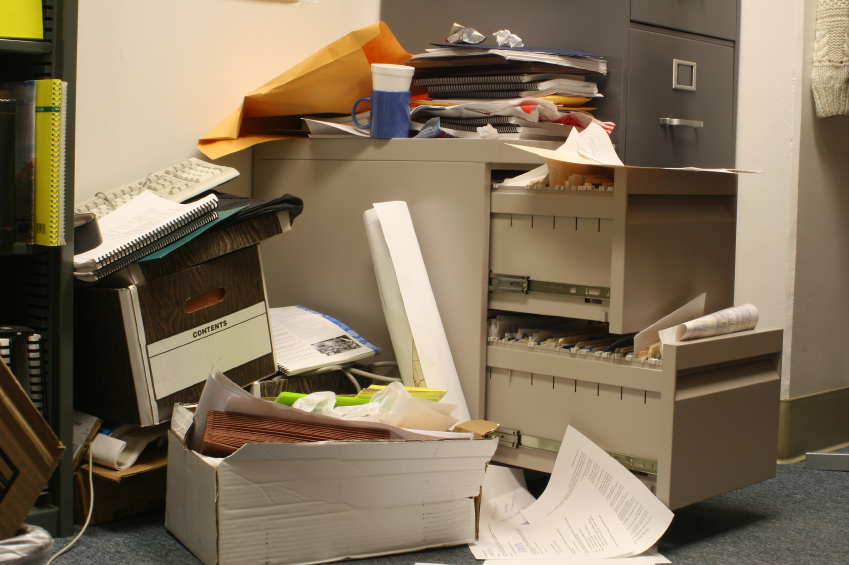
Whether records are left in desk drawers, stacked beside a printer, or sitting in boxes waiting to be destroyed, the information they contain still deserves protection. The longer documents remain in the workplace after they’ve been designated for destruction, the greater the opportunity for them to be misplaced, accidentally viewed, or simply forgotten.
A mobile shredding service shortens that timeline by bringing secure destruction directly to your business. Instead of allowing documents to linger while waiting for someone to deal with them, confidential records move through a secure process from collection to destruction, helping organizations strengthen document security every step of the way.
Put Employee Time Where It Creates the Most Value
Office shredders certainly have their place, but managing ongoing document destruction isn’t the best use of an employee’s time.
Shredding paperwork often involves much more than feeding paper into a machine. Employees sort documents, remove bindings when necessary, wait for shredders to finish, clear paper jams, empty shred bins, and repeat the process whenever more paperwork accumulates.
Over time, those interruptions add up. Finding ways to improve office efficiency allows employees to spend less time managing paperwork and more time focusing on the work that moves the business forward.
Choose a Process That Grows With Your Business
The document destruction process that works for a small office isn’t always enough for a growing organization.
As businesses expand, they often generate more paperwork, hire additional employees, and manage confidential information across multiple departments or locations. Without a process that can adapt, document destruction can quickly become inconsistent and difficult to manage.
Choosing a mobile shredding service that scales with your business helps maintain the same level of security and efficiency as your organization evolves. Whether your needs change gradually or you’re preparing for a larger cleanout, your document destruction process should continue supporting your business—not slowing it down.
Know Your Documents Were Destroyed Securely
Secure document destruction shouldn’t end with uncertainty.
When confidential records are ready to be destroyed, businesses deserve confidence that the process has been completed properly. A professional mobile shredding service provides a documented approach to secure destruction, allowing businesses to know when documents are destroyed and how sensitive information has been handled.
Many Baltimore businesses also value receiving a Certificate of Destruction, which provides documented confirmation that confidential records have been securely destroyed. It’s a simple step that reinforces accountability while giving organizations confidence that document destruction has been handled responsibly from beginning to end.
Make Secure Document Destruction Part of Your Business
Handling confidential documents doesn’t end when you’re finished using them. A smart document destruction process helps protect sensitive information, keeps employees focused on higher-value work, and ensures confidential records are handled securely from collection through destruction.
If you’re looking for a reliable mobile shredding service in Baltimore, Chesapeake Paper Systems is here to help. Contact us to schedule a service that fits your business and makes secure document destruction simple, consistent, and dependable.
Frequently Asked Questions
When should documents be shredded?
Once documents have reached the end of their required retention period, they should be securely destroyed as soon as practical. Allowing confidential records to sit in offices or storage areas longer than necessary can create unnecessary clutter and increase the chance of them being misplaced or improperly handled.
Is an office shredder enough for a business?
Office shredders work well for occasional use, but they can become time-consuming for businesses that regularly dispose of confidential documents. A mobile shredding service is designed to handle larger volumes efficiently while allowing employees to focus on their primary responsibilities.
How often should businesses schedule mobile shredding?
That depends on your document volume and workflow. Some businesses benefit from recurring scheduled service, while others only need one-time shredding for office cleanouts or periodic records disposal.
Why choose on-site mobile shredding?
On-site shredding allows confidential documents to be securely destroyed at your location, giving businesses greater confidence that sensitive information has been handled safely throughout the destruction process.

Paper records are essential to many businesses, but they don’t all need to stay in the office. As filing cabinets fill up and storage rooms become crowded, it can be difficult to know when it’s time to rethink how your records are managed.
That’s where document storage services can make a difference. Rather than relying solely on on-site storage, businesses can move inactive records to a secure off-site facility while still keeping them organized and accessible when needed. Knowing when to make that transition can help improve efficiency, support better records management, and create a workspace that’s built for your business—not your archives.
Your Office Is Becoming a Storage Room
Office space is meant to support the work your business does every day. It’s where employees collaborate, customers are served, and operations keep moving forward. When filing cabinets begin filling hallways, unused offices become storage rooms, or stacks of banker boxes take over available space, your workplace is no longer being used to its full potential.
Every square foot dedicated to archived records is space that can’t be used to support employees, improve workflows, or accommodate future growth. Over time, organizations often outgrow their offices not because of their people, but because inactive files have quietly taken over.
Moving archived records to secure off-site storage allows your office to do what it was designed for: support your business. Instead of making room for years of inactive files, you can make room for the people and resources that drive your company forward.
You’re Keeping Records That Can’t Be Destroyed Yet
Not every document can be shredded as soon as it becomes inactive.
Many paper records must be retained for legal, financial, or operational reasons, even if they won’t be needed again for months or years. This often leaves businesses in a difficult position. The documents still need to be protected and accessible, but they no longer belong in everyday filing cabinets.
Keeping these records in the office simply because they can’t be destroyed yet often creates unnecessary clutter and makes active filing systems more difficult to manage.
Secure document storage services provide a practical solution by giving archived records a dedicated place until their retention period has expired. This creates a clear distinction between active records and archived records, allowing employees to focus on the files they use every day while still meeting retention requirements.
You Need Better Control Over Your Records
As businesses grow, it’s common for records to end up stored wherever there’s available space. A few boxes are placed in a storage room, another filing cabinet is added down the hall, and before long, documents are spread across multiple locations without a clear system for managing them.
Without a clear picture of what’s in storage, managing records becomes increasingly difficult. Questions like Which records are still in storage? When were they archived? Who has access to them? or When should they be reviewed? become harder to answer, making retention reviews, audits, and everyday records management more complicated than they need to be.
A structured storage system brings consistency back to records management. Through organized indexing, barcoding, and inventory tracking, businesses gain a clearer understanding of what they have in storage and where it’s located. Better visibility means better control, making it easier to manage records throughout their entire lifecycle instead of simply storing boxes until they’re needed.
Your Business Is Growing Faster Than Your Filing System
The filing system that worked when your business was smaller may not be able to keep up as your organization grows.
Adding employees, expanding services, or opening additional locations naturally creates more records. Without a storage strategy that can grow alongside your business, many organizations find themselves continually adding filing cabinets, reorganizing offices, or relocating boxes just to create enough room for new documents.
The challenge isn’t simply finding somewhere to put more files. It’s creating a system that remains organized and manageable as your business evolves.
Off-site document storage services provide the flexibility to scale without repeatedly redesigning your filing system. Instead of reacting every time storage reaches capacity, organizations can build a long-term records strategy that supports future growth just as effectively as it supports today’s operations.
Your Team Is Spending Too Much Time Managing Paper
Managing paper records requires more time than many businesses realize. Filing documents, reorganizing cabinets, relocating boxes, and preparing space for new records are all small tasks that gradually add up throughout the year.
While each task may seem minor on its own, together they can pull employees away from the work they’re actually hired to do. Time spent maintaining years of archived paperwork is time that can’t be spent serving customers, supporting projects, or helping the business grow. Creating a more efficient records management process can help businesses reduce unnecessary administrative work while supporting everyday operations.
Moving inactive records into secure off-site storage reduces much of that administrative burden. Employees no longer have to constantly manage expanding archives, yet important records remain protected and accessible whenever they’re needed. Instead of maintaining paperwork, your team can focus on the work that creates the greatest value.
Ready to Take Records Off Your Plate?
Moving your records off-site isn’t just about creating more space. It’s about building a records management strategy that supports your business today while preparing for tomorrow. When archived documents are stored securely, organized properly, and easily retrievable, your office can stay focused on the work that matters most.
If your filing system is becoming harder to manage, Chesapeake Paper Systems can help. Contact our team to learn how our secure document storage services can simplify records management and keep your business organized for the long term.
Frequently Asked Questions
How quickly can I access a document that’s stored off-site?
Professional document storage services are designed to make retrieval simple. Documents are organized, indexed, and tracked, allowing businesses to request specific files whenever they need them without searching through boxes or filing cabinets.
Is off-site document storage secure?
Yes. Professional document storage facilities are designed to protect confidential records through secure storage environments, controlled access, and organized records management processes that help safeguard sensitive information.
How do I know if my business needs document storage services?
If archived records are taking over office space, your filing system is becoming difficult to manage, you’re keeping documents that must be retained, or your company is outgrowing its current storage system, it may be time to consider professional document storage services.
Business records don’t stay relevant forever. As organizations grow and information changes, there comes a point when some documents no longer need to be kept. Deciding when to securely dispose of those records is an important part of staying organized and protecting confidential information.
A one time shredding service gives businesses a secure way to handle large volumes of documents when the need arises. While every organization is different, there are often a few clear signs that it’s time to schedule a shredding service rather than continue storing files that no longer serve a purpose.
Confidential Records Have Reached the End of Their Retention Period
One of the clearest signs it’s time to schedule a one time shredding service is when documents have reached the end of their required retention period.
Most businesses keep certain records for legal, financial, or operational reasons, but those documents don’t need to be stored forever. Holding onto outdated files longer than necessary can make records more difficult to manage while increasing the amount of confidential information sitting in storage.
Regularly reviewing retained records allows businesses to identify which documents should still be kept and which are ready for secure destruction. Once those files are no longer needed, a one time shredding service offers a secure way to dispose of them while helping keep records organized and easier to manage.
Your Storage Areas Are Filling Up
Overflowing filing cabinets and crowded storage rooms are often a sign that old records have started to outstay their usefulness.
As businesses continue to grow, paper files can quietly accumulate until they begin taking over valuable office space. Boxes of archived documents may move from one storage area to another simply because no one has had the time to sort through them.
For many businesses in Alexandria, office space is too valuable to use for storing records that no longer serve a purpose. Scheduling a one-time shredding service helps reclaim that space while creating a more organized workplace that supports better business operations.
You’re Preparing for a Major Business Change
Large business projects often create the perfect opportunity to review and dispose of outdated records.
Whether you’re relocating to a new office, renovating your workspace, expanding operations, downsizing, or preparing for new ownership, these transitions naturally involve organizing files and moving equipment. Rather than packing and transporting documents that no longer need to be retained, many businesses choose to securely destroy them first.
Starting with only the records your business actually needs can reduce unnecessary work, simplify the transition, and help ensure confidential information doesn’t continue following your organization long after it has outlived its purpose.
Managing Old Files Is Taking Time Away From Your Team
Document disposal is important, but it shouldn’t become another full-time responsibility for your employees.
Sorting through years of files, deciding what can be discarded, feeding documents through office shredders, and organizing storage areas all require time that could be spent on more valuable work. As document volumes grow, those small tasks can quickly become a significant drain on productivity.
When document disposal becomes a project instead of a routine task, bringing in professional support allows employees to stay focused on serving customers and keeping the business moving forward instead of spending days managing old files.
You’ve Recently Switched to Digital Records
Many businesses are reducing their reliance on paper by scanning documents and moving to digital recordkeeping. While that transition makes information easier to organize and access, it often leaves organizations with boxes of paper files they no longer use.
Not every original document can be destroyed immediately, so it’s important to follow your organization’s records retention policy and any applicable legal requirements. Once paper records are no longer required, however, continuing to store duplicate copies only takes up valuable space and makes records more difficult to manage.
Completing a digitization project is often the ideal time to review what can be securely disposed of, helping your business fully benefit from a more organized and efficient document management system.
Ready to Clear the Clutter?
Recognizing the signs early can make document management much easier. Whether you’re clearing out outdated records, preparing for a business change, or making room for what’s next, securely disposing of confidential information helps keep your organization organized and protected.
When the time is right to clear the files and move forward, Chesapeake Paper Systems is here to help. Contact our team to schedule a one time shredding service for your business in Alexandria.
Frequently Asked Questions
How often should a business schedule a one time shredding service?
There isn’t a set schedule. Many businesses book a one time shredding service after annual records reviews, office moves, renovations, digitization projects, or whenever confidential documents have reached the end of their retention period.
Can I schedule a one time shredding service after digitizing my records?
Yes. Once you’ve confirmed that paper documents are no longer required under your records retention policy or applicable regulations, a shredding service can help securely dispose of unnecessary paper files.
Is a one time shredding service a good option for annual file cleanouts?
Absolutely. Many businesses use one time shredding services as part of their yearly records management process to securely dispose of confidential documents that no longer need to be retained.
How do I know which documents are ready to be shredded?
The best place to start is your organization’s records retention policy. Once documents have met their required retention period and are no longer needed for legal or operational purposes, they may be ready for secure destruction.

No matter the size of a business, confidential documents eventually reach the end of their useful life. When that happens, how those records are disposed of matters just as much as how they were stored in the first place.
More businesses throughout Baltimore are choosing a professional shredding service to securely destroy sensitive documents. As organizations place greater importance on protecting information and improving day-to-day operations, professional shredding has become a practical solution across a wide range of industries.
Data Security Has Become a Bigger Business Priority
Over the past several years, data security has become a much larger focus for organizations of every size. While conversations often center around cybersecurity, protecting confidential information extends beyond computers and digital files.
Paper documents can contain customer information, employee records, financial details, and other sensitive information that should be handled just as carefully as electronic records. Once those documents have reached the end of their retention period, disposing of them securely becomes another important step in protecting that information.
The cost of responding to a data breach, identity theft, or the accidental exposure of confidential information can be significant. Beyond potential financial losses, businesses may also face operational disruptions, regulatory concerns, and damage to customer trust.
As a result, many Baltimore businesses are taking a more proactive approach to information security by making secure document destruction part of their overall records management strategy rather than treating it as an occasional task.
Outgrowing the Office Shredder
An office shredder may seem like a simple solution for small amounts of paper, although as businesses grow, they often become less practical.
Employees can spend valuable time feeding documents into office shredders, clearing paper jams, and maintaining equipment. During large cleanouts, what starts as a simple task can quickly become hours of work.
Professional shredding services are designed to handle high volumes of confidential documents quickly and efficiently, making them a practical solution for routine disposal and large file cleanouts alike.
Rather than asking staff to manage document destruction alongside their regular responsibilities, businesses can streamline the process while maintaining secure disposal practices.
Growing Businesses Need More Flexible Solutions
As businesses grow, so does the amount of information they manage.
Hiring more employees, serving more customers, or simply operating for many years all contribute to an increasing volume of records. While some documents need to be retained for legal or operational reasons, many eventually reach the end of their retention period and no longer need to be stored.
For many Baltimore businesses, office space is a valuable business asset. Filing cabinets and storage rooms filled with outdated records can limit how that space is used. Securely destroying documents that are no longer needed helps businesses reclaim valuable space while keeping records organized.
Because every organization has different document volumes and disposal needs, flexibility is equally important. Some businesses benefit from scheduled shredding that prevents confidential records from piling up, while others only need a one-time shredding project during an office move, renovation, or annual records cleanout. Having access to services that adapt as business needs change makes it easier to manage confidential information efficiently.
Baltimore Businesses Value Local Expertise
Every industry manages sensitive information differently. From healthcare providers and law offices to financial institutions, manufacturers, and many other businesses, organizations across Baltimore all have unique document disposal needs.
Working with a local shredding provider means partnering with a company that understands those needs and can provide solutions that fit the way each business operates. Rather than taking a one-size-fits-all approach, experienced providers can help organizations build a document destruction process that aligns with their records management practices, document volumes, and day-to-day operations.
As business needs change over time, having a trusted local partner makes it easier to adapt those processes while maintaining secure and efficient document disposal.
Make Secure Shredding Part of Your Business
As businesses continue to rethink how they manage confidential information, secure document destruction has become an important part of protecting information and supporting more efficient operations.
When your files have reached the end of their lifecycle, Chesapeake Paper Systems is ready to help you turn the page with secure, reliable shredding services for businesses throughout Baltimore. Contact our team to find the solution that fits your organization.
Frequently Asked Questions
Why are more businesses choosing professional shredding services?
Many businesses are placing a greater focus on protecting confidential information, improving efficiency, and managing records more effectively. Professional shredding offers a secure and convenient way to support all of those goals.
Why do businesses choose professional shredding instead of office shredders?
While office shredders may work for occasional use, they aren’t designed for large document volumes or ongoing disposal needs. Professional shredding offers a faster, more efficient solution for businesses that regularly handle confidential records.
How do I know if my business is ready for a professional shredding service?
If confidential documents are piling up, employees are spending time managing document disposal, or storage space is becoming limited, it may be time to consider a professional shredding service. The right solution depends on your document volume and business needs.
 Businesses generate and store confidential documents every day, but disposing of those records is just as important as storing them securely. When document destruction isn’t handled properly, it can create unnecessary security risks, administrative challenges, and inefficiencies.
Many of these issues stem from common mistakes that are easy to overlook. Understanding what they are and how to avoid them can help businesses strengthen their records management practices while ensuring confidential information is disposed of securely.
Mistake #1: Waiting Too Long to Destroy Outdated Documents
One of the most common document destruction mistakes is allowing outdated records to accumulate over time. Document cleanouts are easy to postpone because they often compete with more immediate priorities, so paperwork continues to build until storage areas become overcrowded or a large cleanout becomes unavoidable.
Keeping records longer than necessary also means businesses continue storing, organizing, and protecting information that no longer supports daily operations. As document volumes increase, records become more difficult to manage, and future cleanouts require significantly more time and effort.
Regularly reviewing business records and securely destroying documents that are no longer required helps prevent unnecessary buildup and makes records management easier to maintain.
Mistake #2: Destroying Documents Without Following a Retention Policy
While delaying document destruction can create unnecessary clutter, destroying documents too soon can create equally significant problems. Not every record that appears outdated is ready for disposal, and destroying documents without first confirming retention requirements can lead to compliance issues or the loss of important business information.
A document retention policy establishes how long different types of records should be kept before they’re eligible for secure disposal. Rather than relying on guesswork, businesses can follow a consistent process that supports legal, regulatory, and internal recordkeeping requirements.
Before scheduling document destruction, it’s important to confirm that the records selected for disposal are no longer required under your organization’s retention policy.
Mistake #3: Trying to Handle Large Document Destruction Projects Internally
When businesses have accumulated years of paperwork, it’s common to assume the project can be handled in-house using office shredders. While this may seem like the simplest solution, large document destruction projects often take much longer than expected and can quickly become a drain on internal resources.
Employees may need to:
- Sort and organize large volumes of records
- Remove staples, paper clips, or bindings
- Feed documents through office shredders in small batches
- Empty shred bins throughout the process
- Repeat the process until every document has been destroyed
Time spent destroying documents is time employees aren’t spending on their primary responsibilities. Professional document destruction services are equipped to securely destroy large volumes of records efficiently, allowing businesses to complete major cleanouts with minimal disruption to daily operations.
Mistake #4: Treating Document Destruction as a One-Time Task
Many businesses only think about document destruction when storage rooms become full, an office move is approaching, or a records cleanout can no longer be delayed. Waiting until paperwork has accumulated over several years often turns a manageable process into a much larger project.
Instead, document destruction should be incorporated into an ongoing records management strategy. Regular reviews help businesses identify records that are eligible for secure disposal before they begin taking up unnecessary space or becoming more difficult to manage.
Depending on the volume of confidential records your business generates, this may involve scheduled shredding services or periodic one-time document destruction projects.
Mistake #5: Choosing Convenience Over Security
When time is limited, it can be tempting to throw unwanted documents into a recycling bin or regular trash. However, convenience should never come at the expense of protecting confidential information.
Documents commonly requiring secure destruction include:
- Employee records
- Customer information
- Financial documents
- Contracts
- Internal business reports
- Business planning documents
Professional document destruction helps ensure confidential records are securely destroyed using secure destruction best practices rather than unsecured disposal methods. This reduces the risk of unauthorized access while helping businesses maintain responsible information management practices.
Improve Your Document Destruction Practices
Avoiding these common document destruction mistakes can help businesses maintain better records management, protect confidential information, and dispose of records more efficiently.
If your business is ready to securely dispose of sensitive or outdated documents, Chesapeake Paper Systems offers professional document destruction services tailored to your needs. Contact our team for more information.
Frequently Asked Questions
When should businesses consider professional document destruction services?
Professional document destruction services are a good option for large document cleanouts, ongoing shredding needs, or when businesses want a secure and efficient alternative to in-house shredding.
Can businesses use office shredders for document destruction?
Office shredders can work for small amounts of paperwork, but they’re often inefficient for large cleanouts. Professional document destruction services are designed to securely handle high volumes of confidential records.
Why is secure document destruction important?
Secure document destruction helps protect confidential information while reducing the risk of unauthorized access and supporting responsible records management.
How do I know if documents are ready to be destroyed?
Businesses should review their document retention policy to confirm records have met all applicable legal, regulatory, and internal retention requirements before disposal.
 Every business generates paperwork, but over time, those records can become harder to manage. As outdated documents accumulate, they can create unnecessary administrative work and make everyday operations less efficient. Because document cleanouts are often pushed aside in favor of more immediate priorities, these records can continue accumulating for years.
Purge shredding provides a secure way to dispose of confidential documents that are no longer needed. Beyond protecting sensitive information, it can also help businesses operate more efficiently in several ways.
Reduces the Time Spent on Large Document Cleanouts
Document cleanouts are easy to postpone. As paperwork continues to accumulate, the project becomes larger and more time-consuming, often requiring employees to step away from their regular responsibilities to sort, organize, and destroy years of records.
A professional one-time purge shredding service is designed to handle large volumes of documents efficiently. Rather than relying on employees to shred documents in small batches using office equipment, businesses can have accumulated records securely destroyed in a single project. This reduces the time employees spend managing document disposal and allows them to remain focused on the work that keeps the business running.
Keep Records Management Simple
As businesses continue to store outdated documents, records management becomes more difficult. Filing systems require more maintenance, storage space fills up, and employees may spend unnecessary time sorting through inactive records to locate or manage the documents they actually need.
Purge shredding helps by removing records that have reached the end of their retention period, reducing the volume of documents that need to be stored and managed. With fewer inactive files taking up space, businesses can maintain more organized filing systems, making it easier to manage active records and complete future records reviews more efficiently.
Makes Office Projects Easier to Manage
Major business projects such as office relocations, renovations, expansions, or digitization initiatives already require significant time, planning, and resources. Managing large volumes of outdated paperwork on top of these responsibilities can create unnecessary work, as employees may end up packing, transporting, storing, or scanning records that are no longer needed.
Scheduling purge shredding before these projects begin helps eliminate unnecessary documents from the start. By reducing the number of records that need to be handled, businesses can save time, reduce administrative effort, and keep projects focused on the records that continue to support their operations.
Protects Confidential Information Throughout the Process
Even after documents are no longer needed, they can still contain sensitive employee, customer, financial, or business information. The longer these records remain in storage, the more confidential information a business must continually secure, manage, and protect. Knowing which documents should be shredded can help businesses reduce unnecessary risk.
Purge shredding provides a secure way to destroy records that have reached the end of their retention period. By removing unnecessary confidential documents, businesses reduce the amount of sensitive information they need to manage while lowering the risk of unauthorized access or improper disposal.
Supports Better Business Operations
Purge shredding is about more than clearing out old paperwork. It helps businesses spend less time managing outdated records so they can focus more time on day-to-day operations and future growth.
If your business has accumulated outdated records, Chesapeake Paper Systems offers secure, professional shredding services designed to make one-time document cleanouts simple and efficient. Contact our team to learn more or schedule your purge shredding service.
Frequently Asked Questions
When should a business schedule purge shredding?
Businesses often schedule a one-time shredding service after records have reached the end of their retention period, before an office move or renovation, during a digitization project, or when years of outdated documents have accumulated.
What types of documents are typically included in a purge shredding project?
Businesses often include outdated financial records, employee files, customer documents, invoices, reports, and other confidential records that are no longer needed for business purposes.
How does professional purge shredding save businesses time?
Instead of asking employees to sort, shred, and dispose of large volumes of documents themselves, businesses can outsource the project to a professional provider, minimizing disruptions to daily operations.
What are the benefits of scheduling a one-time shredding service?
A one-time shredding service helps businesses securely dispose of accumulated records, reduce administrative work, simplify records management, and free employees to focus on their day-to-day responsibilities.
Can purge shredding improve records management?
Yes. Removing documents that have reached the end of their retention period helps keep filing systems organized, making active records easier to manage and future records reviews less time-consuming.
Real estate transactions are among the most document-intensive processes in any industry. A single residential sale can produce dozens of pages of sensitive paperwork — mortgage applications, financial disclosures, identification copies, credit reports, purchase agreements, and closing documents — all containing personal and financial information that buyers and sellers share with the expectation that it will be handled responsibly.
For real estate agencies and brokerages across the Baltimore, Washington D.C., and Northern Virginia region, that information flows through offices every single day. And for most agencies, the question of what happens to those documents when they are no longer needed has never received a clear answer.
That gap is where real risk lives.
The Volume of Sensitive Information Real Estate Offices Handle
The nature of a real estate transaction means that agents and brokerages collect more personal information per client interaction than most service businesses ever do. Buyers and sellers hand over financial records, identification, and personal details throughout every stage of a transaction — and that information accumulates in physical form across multiple departments and filing systems.
Documents that commonly require secure shredding in real estate settings include:
-
Mortgage pre-approval letters and loan documentation
-
Copies of government-issued identification and Social Security numbers
-
Financial statements, bank records, and proof of funds
-
Credit reports obtained during the transaction process
-
Buyer and seller disclosure forms
-
Purchase and sale agreements and addenda
-
Inspection reports and appraisal documentation
-
Closing statements and settlement documents
-
Lease agreements and tenant screening records for property management operations
-
Agent employment files and independent contractor agreements
-
Commission and transaction coordination records
Each of these document types contains information that, if improperly disposed of, can expose clients to identity theft and expose the brokerage to regulatory and legal liability.
The Compliance Requirements Real Estate Brokerages Must Meet
Real estate is a regulated industry, and the data protection obligations that apply to brokerages in Maryland, Virginia, and Washington D.C. are more specific than many agencies realize.
Gramm-Leach-Bliley Act (GLBA)
Real estate agencies that facilitate mortgage referrals or work with affiliated lenders are classified as financial institutions under GLBA and are required to implement safeguards for customer financial information, including at the point of disposal. The FTC Safeguards Rule that implements GLBA requirements applies directly to many brokerage operations.
FACTA
The Fair and Accurate Credit Transactions Act requires any business that uses consumer report information — including credit reports obtained during buyer qualification — to properly dispose of that information by shredding or otherwise rendering it unreadable. Placing credit reports in a recycling bin or standard trash is a federal violation.
Maryland, Virginia, and D.C. Data Protection Laws
Maryland’s Personal Information Protection Act, Virginia’s Consumer Data Protection Act, and D.C. data security regulations all require businesses handling personal information about residents to implement reasonable security procedures, including secure destruction when records are no longer needed. Real estate agencies operating in the greater Washington metro area touch all three jurisdictions regularly.
State Real Estate Commission Requirements
Both the Maryland Real Estate Commission and the Virginia Real Estate Board impose recordkeeping requirements on licensed brokerages — specifying how long transaction records must be retained. Those requirements create a corresponding obligation to destroy records securely when the retention period ends, not simply to discard them.
Failure to meet any of these requirements can result in regulatory action, civil liability, and — in an industry where referrals and reputation are everything — lasting damage to client trust.
Where Informal Disposal Habits Create Exposure
Real estate offices are busy environments. Agents are juggling multiple transactions, coordinating with lenders and title companies, managing client communications, and keeping deals on track. In that context, document disposal rarely gets the attention it deserves.
Outdated listing files get cleared off desks and dropped in the recycling bin. Expired buyer agreements from clients who didn’t move forward get thrown in the trash. Old transaction files from closings that happened three years ago get boxed up and eventually discarded without any formal destruction process. Copies of identification and financial documents that were collected early in a transaction but never filed properly end up in shred piles that nobody manages consistently.
These habits are not intentional — they are the natural result of operating without a clear system. When no secure disposal process exists, the default becomes whatever is most convenient in the moment.
A professional shredding program replaces those informal defaults with a consistent, documented process. Secure locked containers placed throughout the office give agents and staff a designated location for documents heading for destruction, eliminating the recycling bin as the path of least resistance.
How Scheduled Shredding Fits Into a Real Estate Office
For agencies that handle transactions continuously throughout the year, scheduled shredding is the most practical and reliable solution.
Secure collection containers are placed in key areas — agent workstations, the front desk, transaction coordination offices, and any other location where sensitive documents are regularly handled. Documents go into the containers as they are produced or reviewed, without requiring individual disposal decisions or extra steps.
Chesapeake Paper Systems collects the containers on a regular schedule and shreds the contents on-site, before anything leaves your location. Every service produces a Certificate of Destruction — documented verification that client records were destroyed securely and in compliance with applicable regulations. That certificate belongs in your compliance records and provides clear evidence of responsible document handling if it is ever called into question.
Scheduled service can be adjusted to match the agency’s transaction volume and pace, whether that means monthly, biweekly, or more frequent collection.
One-Time Shredding for Accumulated Files and Purges
Many brokerages reach a point where years of accumulated transaction records need to be addressed at once. Closed files from transactions that happened five, seven, or ten years ago. Old lease files from a property management division. Expired listing agreements and buyer representation contracts that should have been destroyed long since.
One-time shredding allows agencies to address that backlog efficiently and completely. Documents are collected and destroyed on-site in a single appointment, and a Certificate of Destruction is provided upon completion. For brokerages conducting a planned records purge as part of a retention schedule review, or simply clearing out filing cabinets and storage rooms, this service makes the process straightforward and fully documented.
One-time shredding is also the right solution for agencies relocating offices, merging with another brokerage, or transitioning to a paperless transaction management system.
Hard Drive Destruction for Retiring Office Technology
Real estate offices cycle through computers, laptops, and other devices regularly. The devices used by agents and staff accumulate significant amounts of sensitive client data over their useful life — transaction files, scanned documents, email correspondence, contact databases, and financial records stored across local drives and practice management software.
When those devices are retired, replaced, or traded in, the information stored on them does not disappear automatically. Deletion and reformatting are not sufficient to prevent data recovery with modern tools. Physical hard drive destruction is the only reliable method for ensuring that client information cannot be accessed after a device leaves the agency’s control.
Chesapeake Paper Systems provides hard drive destruction for real estate offices retiring equipment, upgrading technology, or clearing out devices from former agents — with documentation to verify that each device was properly handled.
Protecting the Clients Who Trusted You With Their Transaction
Buying or selling a home is one of the most significant financial events in a person’s life. Clients share their income, their assets, their credit history, and their personal identification because the transaction requires it — and because they trust the agency handling their deal to protect that information with the same level of care they apply to everything else in the transaction.
That trust extends past the closing date. It covers how transaction records are stored during the required retention period and how they are destroyed when that period ends. A brokerage that cannot account for what happens to client records after a transaction closes has a data security gap that creates real exposure — for clients whose information may be at risk, and for the business that is responsible for protecting it.
A professional shredding program closes that gap. It gives real estate agencies a consistent, documented, and compliant approach to document destruction that reflects the level of professionalism their clients expect at every stage of the transaction.
Chesapeake Paper Systems provides professional document shredding, hard drive destruction, and records storage for real estate agencies and brokerages throughout Baltimore, Washington D.C., and Northern Virginia. Contact Chesapeake Paper Systems today at 844.400.2437 to learn how a shredding program can protect your clients and your business.
Government agencies and public sector organizations handle an enormous volume of sensitive information every single day. From personnel records and financial documents to constituent data and internal communications, public offices carry a responsibility to protect that information that goes well beyond what most private businesses face.
Yet document security in government settings is often inconsistent. Filing rooms accumulate records with no clear destruction schedule. Outdated computers sit in storage with data still on the drives. Paper documents are discarded without being properly shredded.
When that information is mishandled, the consequences are serious — for the individuals whose data is exposed, and for the public trust that government institutions depend on.
The Unique Records Management Challenges Government Offices Face
Public sector organizations face document security challenges that are different in important ways from those in the private sector.
Government offices must comply with federal, state, and local records retention laws that dictate how long specific categories of documents must be kept before they can be destroyed. These retention schedules vary by document type and can be complex to manage without a structured system in place.
At the same time, many government offices operate with limited administrative staff and budget constraints that make it difficult to maintain rigorous records management practices internally. The result is often a backlog of documents that have long since passed their retention period but have never been formally reviewed or destroyed.
Common types of documents government offices must manage securely include:
- Personnel and HR records for government employees
- Tax records and financial documentation
- Permit and licensing files
- Court and legal records
- Law enforcement records and case files
- Constituent correspondence containing personal information
- Internal communications and policy documentation
- IT equipment and digital storage devices containing sensitive data
Each of these categories carries its own handling and destruction requirements — and improperly disposing of any of them creates real legal and reputational risk.
Why Secure Destruction Is a Legal Requirement, Not Just Best Practice
Government agencies are subject to a range of federal and state regulations that specifically address how sensitive records must be handled at the end of their lifecycle.
The Privacy Act of 1974 requires federal agencies to protect personally identifiable information collected from citizens and to ensure it is properly disposed of when no longer needed. State-level equivalents apply to local and state government entities.
HIPAA applies to government agencies that operate or oversee public health programs, requiring that protected health information be rendered unreadable and unrecoverable before disposal.
The Federal Information Security Modernization Act (FISMA) establishes requirements for protecting federal information, which includes the secure destruction of physical and digital records.
For agencies in Maryland, Washington D.C., and Virginia, state and local regulations add additional layers of compliance that must be factored into any records destruction program.
Failing to meet these requirements can result in regulatory penalties, civil liability, and — perhaps most damaging — the loss of public confidence that government institutions work hard to maintain.
The Risk of Outdated Hard Drives and Digital Media
One of the most overlooked document security issues in government settings involves digital storage devices.
As agencies upgrade their technology, retired computers, servers, laptops, and external drives are often set aside in storage rooms with no clear plan for destruction. Many organizations assume that deleting files or wiping a hard drive is sufficient to protect the data it contains.
It is not.
Modern data recovery tools can retrieve information from drives that have been formatted or had their data overwritten. The only method that reliably eliminates data from a digital storage device is physical destruction — shredding the drive so that recovery is impossible.
For government agencies that store sensitive constituent data, personnel records, law enforcement information, or financial records on their devices, hard drive destruction is not optional. It is a necessary step in any complete document security program.
Chesapeake Paper Systems provides hard drive destruction services for government offices and public sector organizations throughout the Baltimore, Washington, and Northern Virginia region — with documented destruction that gives agencies the verification they need for compliance purposes.
How Scheduled Shredding Keeps Government Offices Compliant
One of the most effective ways for government offices to manage document security is through a scheduled shredding program.
Rather than allowing paper records to accumulate until someone initiates a cleanout, scheduled shredding creates a consistent, ongoing process for disposing of documents that have reached the end of their retention period. Secure containers are placed throughout the office, and a professional shredding service collects and destroys the contents on a regular schedule.
This approach offers several advantages for public sector organizations:
- Documents are destroyed consistently rather than when someone finds time to address the backlog
- Secure containers ensure that sensitive records are never left unprotected between collection and destruction
- Scheduled service creates a documented, auditable trail of destruction activity
- Staff are not required to manage the process themselves, freeing up time for other responsibilities
For agencies with higher document volumes or specific compliance requirements, the frequency and scope of scheduled service can be adjusted to fit operational needs.
One-Time Shredding for Large-Scale Records Cleanouts
Many government offices reach a point where years of accumulated records need to be addressed all at once. This is particularly common when an office is relocating, undergoing a reorganization, or conducting a formal review of its document retention practices.
One-time shredding services allow agencies to clear out large volumes of paper records efficiently and securely. Rather than spending staff time sorting and shredding documents manually, a professional service handles the entire process — with secure collection, on-site or off-site destruction, and a certificate of destruction provided upon completion.
That certificate is important. For government agencies subject to audit or regulatory oversight, documented proof of proper destruction demonstrates compliance and provides a clear record of how records were handled.
Records Storage for Documents That Must Be Retained
Not every document is ready to be destroyed. Government agencies must retain many categories of records for specific periods before destruction is permissible.
For records that need to be kept but don’t need to occupy valuable office space, secure records storage provides a practical solution. Files are stored in a protected, organized facility where they can be retrieved when needed and destroyed on schedule when their retention period ends.
This approach keeps government offices organized, reduces on-site storage demands, and ensures that retained records are protected with the same level of security applied to active files.
A Trusted Partner for Public Sector Document Security
Chesapeake Paper Systems provides secure shredding, hard drive destruction, and records storage services for businesses and organizations throughout Baltimore, Washington D.C., and Northern Virginia — including government agencies and public sector organizations that require a reliable, compliant document security partner.
Their team understands the compliance requirements that apply to public sector organizations and delivers services designed to meet those standards — with documented destruction, secure chain of custody, and professional handling at every step.